Showing posts with label public health. Show all posts

Wednesday, 24 November 2021

Air pollution and public health

Image source: nrdc.org
Occupational health and safety concerns continue to become a serious matter today, notes safety expert Martin Sanders. There are consequences to having a developing world, and one of these is the increasingly poor quality of air. Certainly, air pollution becomes a challenge for public health.

This blog shares several facts that are worth looking at:

1. The biggest environmental risk of early death

It might surprise you to find out that air pollution is the biggest environmental risk of early death. Statistics show that this is responsible for 1 out of every nine deaths. That points to about 7 million deaths each year, and it is worth noting that this is more than the annual fatalities due to HIV, notes Martin Sanders.

2. More widespread than you would expect

There are 500,000 deaths related to air pollution each year in Europe, while there are 300 million people who live in places that have been tagged to have extreme air pollution. These places include India and China, where toxic fumes are six times higher than international guidelines.
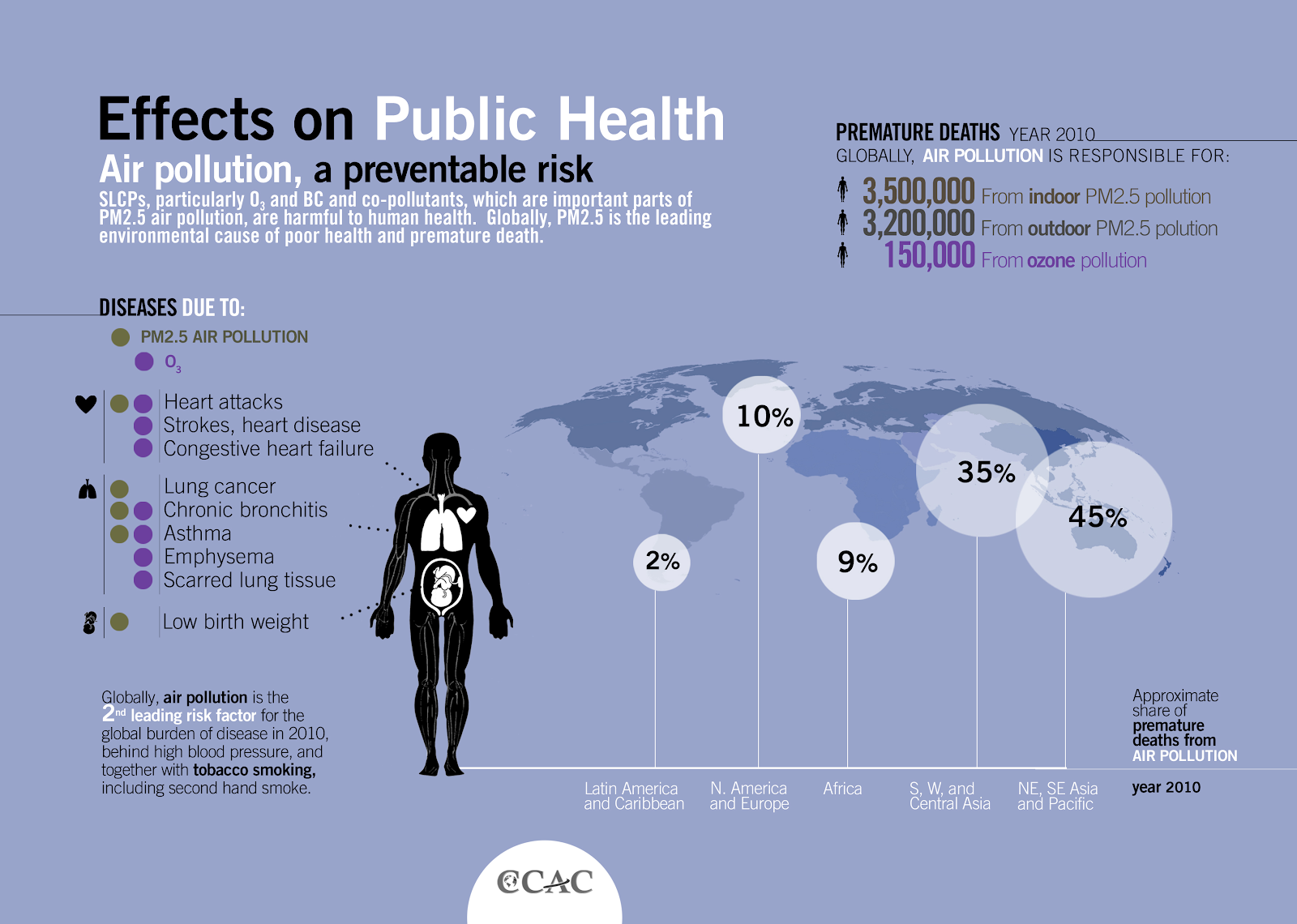
Image source: grida.no

3. A warning on tiny particles


According to experts, the most dangerous type of air pollution is characterized by the presence of tiny particles. They cause serious damage to the lungs, but this is the bare minimum damage they can cause. When these enter the bloodstream, they can poison various organs inside the body. Often, these are made of nitrates, sulfates, and mineral dust.

Capt. Martin Sanders, Ph.D., is a scientist and a commissioned officer of the U.S. Public Health Service. He continues to provide his expertise in public health and occupational safety by acting as a consultant. For updates, visit this page.

Disclaimer: This site was prepared by Martin Sanders in his personal capacity. The opinions expressed are the author's own and do not reflect the views of the USPHS, the Department of Health and Human Services, or the United States government.

Wednesday, 19 May 2021

Major disciplines of environmental health


There are five major disciplines in the field of environmental health. Captain Martin Sanders wishes the public to understand the role of Public Health Officers, as he lays down an overview of each discipline that has an impact on our natural and built environments.

Image source: verywellhealth.com

Environmental epidemiology

It studies the impact of environmental exposures on human health, such as exposure to radiation, chemicals, microbiological agents, etc. However, with ethical considerations, these studies are 'observational' in nature, meaning information is gathered after exposure has occurred.

Toxicology

Unlike environmental epidemiology, studies here involve animal subjects to determine the effects of environmental exposure and to understand possible health outcomes in humans. Careful analysis and interpretation must be considered since animal- and human biology are significantly different.

Image source: stevens.edu

Exposure science

Studies under this discipline support environmental epidemiology by identifying and quantifying exposures. It describes the exposure and its impact on health, identifies them through toxicology study, or determines exposure levels. These are like lab results that a doctor uses to assess a person's health based on the numbers that he or she sees.

Environmental engineering

The main goal of this discipline is to protect human health, the health of organisms, and the quality of the environment. To achieve this, environmental engineers devise solutions such as wastewater management, recycling, air and water pollution control, among others.

Environmental law

This is simply concerned with statutes, regulations, treaties, common laws, and customary laws which govern and addresses human activity and its impact on the environment.

Captain Martin Sanders, Ph.D., is a seasoned public health and safety expert with more than a decade of service in the occupational health and safety sector. He was Director of Safety, Environmental Compliance and Emergency Management of the Federal Occupational Health, Program Support Center, Office of the Assistant Secretary for Administration. He recently obtained a certification as a Certified Safety Professional (CSP) awarded by the Board of Certified Safety Professionals. For similar writings, visit this page.

Disclaimer: This site was prepared by Martin Sanders in his personal capacity. The opinions expressed are the author's own and do not reflect the views of the USPHS, the Department of Health and Human Services, the Department of Homeland Security, or the United States Government.

Wednesday, 29 January 2020

How to lower your chances of contracting airborne diseases

Image source: mnn.com
In a world where a trip to the emergency room can bury you in debt, staying healthy should be everyone’s priority. Prevention is better than expensive treatment, especially if the diseases one can get are avoidable. According to Capt. Martin Sanders, Ph.D., CSP, airborne diseases are very common and at the same time, quite preventable. Here are some ways on how to lower your chances of contracting airborne diseases like influenza, the common cold, measles, and mumps.

If you know that a person is sick with a disease that can be transferred, avoid close contact with them. The same goes for people who show symptoms of the disease like coughing, sneezing, having a runny nose, or have a sore throat.

Unfortunately, it can be difficult to spot people who display these types of symptoms, especially when one is in transit. It can also be possible that avoiding people who show these symptoms is not something you can do. It could be a co-worker that came in ill or a sick customer ordering coffee. In these cases, you can wear a face mask to prevent breathing in germs.

Image source: medicaldaily.com
While you could be safe from inhaling germs, your hands can be the vehicle to which they enter your body. According to Capt. Martin Sanders, one must wash their hands thoroughly and as often as possible. Also, avoid touching your face with unwashed hands.

Capt. Martin Sanders, Ph.D., CSP, is a scientist officer in the Commissioned Corps of the U.S. Public Health Service. He has more than 10 years of service in the field of epidemiology and occupational safety and health, with extensive experience in biological defense activities and infectious disease outbreak investigation. For more articles like this, visit thisblog.

Disclaimer: This site was prepared by Martin L. Sanders in his personal capacity. The opinions expressed are the author’s own and do not reflect the views of the USPHS, the Department of Health and Human Services, or the United States government.